Total Pageviews

Showing posts with label Dumped ATR. Show all posts

Thursday, September 20, 2012

The Invisible ATR

Here is the latest in the on-going tale of one of our most popular contributors, Dumped ATR. 

Here it is again. I should call myself "Formerly Dumped, now Invisible ATR."

When I was about seven, one of my favorite songs was the goofy, "Monster Mash." Between that song and daily doses of "The Count" on Sesame Street, I perfected a cheesy Dracula voice that I used at birthday parties and recess. Who knew that some fifty years later, I'd become a true denizen of the after-life--a veritable ghost.

At the school to which I have been assigned, there was a vacancy in my very own subject area. There are two of us ATR's at the school, in fact, who are in this license. The schedule which the "Vacancy" would fill included a very raucous last period class. Since visitations by different persons each day would have opened the doors for these students to be difficult for a whole new unsuspecting person each day, my supervisor decided that one person should cover that class consistently until a teacher was hired. This was said to me--or perhaps across me--as I find it hard to imagine that a person was really looking at me and discussing a job I was qualified for and was soon going to cover, without offering me, at least, a courtesy interview. Since I am a ghost with a license who tends to take visible form as directed, the class was summarily printed on my schedule. 

Actually, they are a bright bunch of kids. Upon advice from a colleague, I decided to take the class as if it were mine. I put the kids in assigned seats, taught my lessons, assigned homework and handed back graded classwork. By day three, we were in a kind of rhythm. I told the supervisor on the second day that I enjoyed the class and explained what my holiday assignment would be. I also mentioned that I would grade it and hoped it would be taken into account in their final grade. At that point, I was informed that a candidate had been selected. When we returned from the four day holiday, a brand new teacher had, in fact, been hired. 

The students in the class are not happy. They don't understand why I'm not their teacher. The new teacher can't handle them. (They are very bright and they can challenge your every move. You just need to be very structured.) Some of them gave their assignment to the new teacher and some to me. I'm trying to find the teacher so we can talk about if it will be considered for their first cycle grades. 

At no point did my supervisors come see me teach. It would have been an easy way to see if I could handle the job--especially as I had to create my own structure. I wouldn't have the benefit of teaching a "demo lesson" in which students might be more courteous because they had been asked to be good hosts to the visiting teacher.

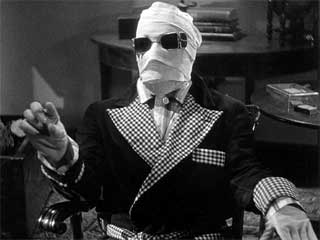
Claude Raines in a scene from a 1933 movie
adaptation of H.G. Wells's novel, The Invisible
Man
It's one thing to say that we are using "fair market" tactics to select teachers, but when you practically treat a person as invisible, there is nothing equitable going on. In the end, the consistency that was necessary until a teacher was hired was abandoned once they brought the new person in--a few days were more important than the semester. The students' interests were as invisible, I think, as I was.

Wednesday, September 5, 2012

Dumped ATR sings a sad song

A veteran contributor, Dumped ATR, reflects on her first day back to school, and back in the ATR. 

Why don't they mention the pain?

Chita Rivera
When Kander and Ebb wrote the song "Why don't they mention the pain?" for Chita Rivera's autobiographical cabaret act, they were giving a veteran and a star a moment to be both comic and honest about the difficulty of performing even for someone talented and fortunate in her career. It is tremendously ironic for me to invoke this song in discussing the substance of my conversation with other ATR teachers on this first day of school. But, I remember what it felt like to hear this song: to look into Rivera's eyes and feel the physical and spiritual torture that comes from trying to succeed as a dancer. 

Five ATR's showed up at a medium-sized high school in Queens. Two of us had done leave-replacements last term--and all of us had filled in for another teacher more than once. We were all in our forties, with over twenty years of experience. We should have been able to get our rooms ready, make copies for the upcoming days' lessons, touch base with colleagues about their summers, etc. Instead, we attended meetings with the faculty who shared their concerns and congratulations. We tried to be helpful and offered our advice too eagerly to people who don't know us in an effort to show our knowledge and usefulness. At lunch, however, we talked about "the pain." The times we expected to be hired and weren't. The school supplies we bought for classes we weren't offered, after all. The many times we blended into the wildness and the chaos of schools in which we didn't know students' names. 

The supervisors who made use of our energies, who lent their phone numbers to our lists of references, who were thankful, but did not make us permanent staff, may not have been thinking of us this afternoon. But, we were thinking of them--of their demands, and in some cases, their gall. The supervisor who threatened to put a letter in a file, and then tried to "pull us from the rotation"--use us an ATR for a few weeks without even the dignity of a provisional hire for a leave replacement. The supervisors who went out of their way to try and keep us and couldn't. The students we would probably never see again. 

It's especially difficult to have spent a good part of your professional career having tried to make a difference in students' lives, and now find yourself "disappearing" almost as soon as you begin to teach classes of kids. I don't know where most of the students I taught in a leave-replacement two years ago went to college. Principals don't invite you to graduation--they have more pressing things to do, but you still wonder what happened--did the kid who was struggling to pass math ever score above a 75, or is she heading for remedial math in college? If you do find out that the latter is the case, you feel guilty. Of course, other people taught that student after you moved on. But you will never be sure that you got any one part of your lesson right--did the skills stay with that kid in September? People are busy with the kids and demands in front of them, and so are you. 

I have managed to stay in touch with some colleagues and that has been wonderful. But, as I went to my assignment today, I missed what I might have shared with the people I worked with last spring as a leave- replacement for someone who is now back. What did they decide to do about that 11th-grade curriculum question? I'm still thinking about it--sure, I've texted back and forth, but I'm way behind the conversation. It's like tweeting to players on a sports team after the regular season is over--they are in their playoffs. The question is no longer the same.

And they know I wish I were there. And that it's painful. But, I mention this for my colleagues who are in pain and who may not be acknowledged by anyone. And for all of us for whom the pain is also cumulative.

Monday, July 23, 2012

Acting As If: The 13 Week Trial


Here's a new piece by our contributor Dumped ATR.  Her name fits her experiences, but she is trying to be positive.

It wasn't a bad spring, though my UFT Rep said I had a rough year. He and others have been trying to help me find a position after doing a good job at my spring "leave replacement" position. Here's how it went.


I took what turned out to be a leave replacement position this spring at a large, but pleasant high school on the other side of the NY Planet from where I live. It was the first time I had taught five, maximum-sized classes (my entire career has been spent in small schools, up till now.) All of these classes were well-attended, with students doing homework, extra credit--practically anything I assigned. Nobody thought I had a great shot of getting hired, though the coordinator of my department really wanted to bring me on board. However, in my mind, I believed I would be hired, and I tried my best to allow that belief to guide my work--to "act as if." Well, I wasn't hired permanently, though I was told I could apply for the job on the open market. As I don't want to feel doubly beaten, I chose not to do so. 


There are pros and cons to having been provisionally hired. If I hadn't done well in the position, I would be glad to leave it. However, I invested my abilities "as if" I were a permanent member of the staff. I'm not sure if my principal took the time to imagine me with quite the same interest. Of course, he doesn't have to do that. In fact, once he was asked by the DOE to make a decision about me (at 13 weeks in to a position I took over in the middle of the year) he made his decision, and that was it. (The DOE did this everywhere, don't ask me why.) To be safe, as he told the UFT Rep at the school, he "kept his options open." I had thirteen weeks in which there was one key observation by the principal, plus several "snapshots." The two department chairs who hired me, observed me and fought to keep me, to no avail, though I was honored by their efforts.

To be fair, I choked during that one observation, causing my class to basically ask me the next day, in polite terms, "WT--." They were stumped by what was, arguably, the most pretentious "Do Now" I had ever asked them and they had a hard time making connections to the follow-up questions. I panicked and thought, "Maybe they haven't understood anything I've said." The truth was, I had created a lesson designed to impress the principal and not really in the style in which I teach, or speak. The coordinator figured this out. So did my students (who also confessed they froze because the principal was there. No, I did not tell them in advance that I was being observed.) The next day, we completed the task that I had wanted them to do the day before in our usual rhythm with time to spare for good discussions. But, the principal would never return, despite attempts of administrators and senior faculty to get him to do so. Colleagues said that they had never seen so many people rally for one person. I'm very grateful. My supervisors were very complimentary and pleased with my work. They also knew, as one said, that I felt like "my entire career rested on the principal's observations"--and that it was difficult for me to keep my nerves from jumping out of my skin in his presence. For that reason, they sometimes popped in on me, to get me used to people walking in, and to emphasize to me what I did well, so that I might be less nervous should the principal come again. 


He didn't, unfortunately. I tried to act "as if" everything was okay, regardless, but the more time passed that he didn't return, the more, inside anyway, I felt like the chances of staying in the school were over. My colleagues were extremely understanding and supportive and I made many friends among them. They continually reminded me that they saw how hard I worked and that they knew I was a good teacher. But, the days passed. Oh sure, he came by for "snapshots." Walked in for less than five minutes during a discussion here and there. Asked my students what they were writing about. I was told that, unless he saw something he didn't like, he usually didn't stay long on these little surprise visits. He must've liked some of what he saw as he didn't stay. The one discussion I had with him directly after a snapshot (I got feedback from my coordinator) involved him saying I was "brilliant," but should try to let the students who are late pick up their handouts instead of passing them down to them. I took too much stock in the compliment, as it became clear to me later, that he didn't really have much of a handle on who I was or what I did. Certainly not enough to want to give me a second chance. I did get an "S" rating at the end of the year, and since everyone continued to rally for my employment until the end, I am secure in the idea that I did not do a terrible job. 


Nevertheless, the teaching experience was exhilarating. It was incredible to find myself "just teaching." My students were welcoming, sensitive and enjoyed challenges. I know the principal has no obligation to work with me or get to know me. I guess I simply wish he did. I would have committed to working with him. That wouldn't have been acting.

Monday, January 30, 2012

Dumped ATR lands a job--and offers encouragement


Dumped ATR, a NYCATR correspondent, recently endured a depressing interview.  But guess what?  She got the job!


Well, I got the job!  Who'da thunk it?

Well, actually, a lot of people. The host of this very blog was one,  Amy Arundell at the UFT was another and a host of good friends.  No doubt, there were still plenty of people who are waiting for the "catch." I do have to sign a provisional agreement saying if this doesn't work out, I will go back to being an ATR.  And a good friend in the ATR pool actually told me to worry that I haven't signed it.  That I might actually not be hired, but be some kind of long-term ATR.  I don't even know if there's such a thing, but it made me worry.  Of course, because everyone is used to new faces coming and going, some people asked, after I introduced myself, if I was at the school, "permanently?"  You can't blame them.  For the most part, I've been welcomed with open arms and supported.  

For the first time in--ever--I'm in a school with a large staff in my department and an actual chairperson.  It's inspiring and daunting.  I have to have long conversations with people when I get home to make it seem real. I've already bought TWO school sweatshirts and I have my eye on the Sing t-shirt.  I've been in the vast book room...  Am I really THERE?  I want desperately to feel it's true, to not think about the possibility of not being asked back.  I want to belong. 

Teachers at this school talk about the courses they've created and teach and it brings back memories of the ones I taught for years that have become traces on my resume.  There's no way not to feel a little envious.  At the school in which I taught that was closed, we had a system in place.  I was the person people went to right after the basic skills person.  Then they went on to someone else.  We dovetailed into each other's work naturally, through discussion of the kids.  Even when we didn't get along, we talked about the kids and that generated ideas and shaped our work.  The same is true at the school in which I am on faculty (really, I really believe it). It's a beautiful thing.  

Sure, the teachers complain about some of the same things ATR's complain about on this blog: overcrowding, cutting, parental negligence. But, they're home.  Every one of them has established his or her place in the development of students at this school.  One is the "Grammar Goddess."  They have hand-outs they pass around in every class  created by different faculty members.  I remember this.  I had an outline for a college essay that I used all the time.  Another faculty member had a pristine outline for Regents essays.

More than anything else, as we travel through this Department of Education, we need to find ways to support each other and give each other strategies for survival.  All of us once fit into a scheme or a family which is no longer there and it's hard, in a way, to even feel like you want to join something new, sometimes.  Like having been a father and now finding yourself a son who feels like a stepson. I overheard someone say I was, "the ATR they brought in" and it panicked me.  Better to assume the best and push the issue; I'm assuming after three interviews and a demo lesson and discussion with two administrators about my start date and that this was a provisional hire that I am faculty, at least till June and hopefully beyond. Two years ago, I did join the founding staff of a school whose founding staff then proceeded to leave after the first year, so I know that being provisional has its positive sides.  If I hadn't been, I probably wouldn't be teaching at all.  

But, this is not a brand new school, one among the many whose turnover rate is faster than the service at McDonald's.  

This is a school "as it should be."  I am lucky to have a chance at such a thing again and I will just assume the best and enjoy it.  It's very hard for me to do that and I know a million things I could say or think, and I have a strong radio signal of voices who tell me of all the horrors that might occur.  However, right now, it's good.  Maybe, just maybe, it will stay good.  Somehow, most of the people in this school have worked hard to create a nurturing environment for everyone.  I have to help them for the students, for them, and for me.  Places like this have to continue.  

In every school in which I have been placed, there have been people trying their best. I've stayed in touch with many of them.  It was very funny for me to hear the same complaints we all make coming from my colleagues.  We are all trying to survive and flourish.  What I hope is that we all find good places to teach and that we see lights in these tunnels.  I've found one.  In whatever way I can control my ability to stay, I will.  What I can't, I can't.  

Honestly, I never thought anyone would hire me and I imagined if they did, it would be to set me up to fail and put me out of the system.  I know that's not happening here.  I have my class lists, their grades, and people telling me about the kids and what they do everywhere.  It's an amazing faculty
.
I'd like to feel I belong to it, both as a legitimate member of the staff, and as an experienced teacher. I remember that feeling; I've even had it, in passing, in different substitute positions.  

If we can find ways to do productive work everywhere they put us, for however long we are hired, we can "call their bluff."  This Dept. of Education is determined to prove we can't hack it.  Every complaint I've seen here--about clothing, respect, chaos, etc.--I've heard from faculty at every school.  The difference is, the faculty talks up their achievements and the complaints stay in the teacher's lounge. Yes, we should expose problems and we should let the world know the absurdity we face never being able to take for granted that we will find ourselves again as faculty, with access to Aris, our own log-in names, and our own classes.  The kind of thing you never expected to worry about after umpteen years in the system.  I never expected to work at a highly functioning, competitive school, but, until my school closed, I always thought I'd be able to work with at-risk kids, that I had that "down," and that I could build programs for those students.  In my first term as an ATR, I lost my classroom and there was no place for me to go between classes, except to sit in the back of other classes being taught.  Suddenly, I was assisting a science teacher in a class I hadn't taken in high school.  I taught myself the course, but then shortly after, my assignment changed.  I lost "it."

We have to take "it" back.   The confidence.   We have to brag about what we do, when we can.  When a school asked me to stuff envelopes, at first, I just did what they told me, though I did mention to the UFT Rep that I thought I should be teaching, and he was working on it.  But, I went into the halls during passing and I started to help clear them.  An AP grabbed me and asked me what I teach, and then asked me to help a group of students.  Then he paired me with a wonderful teacher with whom I still correspond. I know some principals are just going to give you bathroom duty and that is a "shanda"--the Yiddish word for travesty. But, I know all of you are talking to kids.  You're trying.  We've got to be more proud of what we do so that when--and I do now believe WHEN--we do get hired, we feel good about who we are and we can even talk up what we've been doing in these confounded weekly rounds around the district.  We do work.  We do talk to kids.  I walked into a school and a coverage of a music class in which I could not, obviously, teach guitar.  We talked about the upcoming concert and their finals and what was hard, what was not, and they practiced.  In the middle of the class, a kid grabbed me and started talking to me about an essay, and the girl next to me talked to me later about her self-image. I told her I was worried about her when I saw her next, and it stunned her.  In her mind, I could see the question: "She caught on to what I'm feeling."  We went to a counselor. It was just an interaction. Not a lesson. But, I know all of your are doing it.  

I'm grateful to the people who didn't see me the way I did--as an outcast.  I believe (I want to, I hope to) that I can prove that I belong on this faculty. I can prove it to myself. Ultimately, since we are all now "free agents," we have to believe we are no different than the people who happen to have programs at these schools.  They're frustrated, they're worried and they're confused. Some believe they will all be ATR's. Yet, the person who walks the halls in the school, does grades and talks to kids, is grounded.  We need to carry that grounding with us.  

I wish us all luck.  

Saturday, January 21, 2012

Dumped ATR endures an interview

Dumped ATR, a rising star in the blogosphere, submitted this piece about a recent job interview she endured.  Her angst should be familiar to all ATR teachers who have had to put themselves up for sale after their successful careers took a wrong turn. 

At 6:25 AM, it became clear to me that I could not go to my Assigned School before my interview. My first coverage would be at 7:10, and while I could get there, there was still the question of which white shirt underneath the stunning jacket, and which texture of pants matched it and was comfortable. And then, how much cover-up to use over my middle-aged acne. So, I called in. 

I'd already arranged for someone to drive me to the school and back from my assignment so I re-arranged things and left from home. When I got in the car, I was calm, had a packet of materials ready and was reading articles on best practices on my cell phone. There was a bottle of water in my backpack. (It's a really slick- looking and expensive, if huge bag, and it can hold everything a teacher might need in the Gaza strip while still managing to flash its trendy label in an offhanded, but visible way.) I was fairly ready and was even able to dodge the pushy car service driver's questions about my likelihood of getting the job, disability and, of course, why I DO NOT HAVE A POSITION yet. When I need to be someplace absolutely smoothly, I use this one driver, who unfortunately is a cross between Stanley Kowalski and the legendary Kramer on Seinfeld. No, I don't have a car, yes, I live very far out in the boroughs and I neither have cable nor own property, which is how I can afford this occasional luxury. 

I was 20 minutes early, but decided to go in as the school was on another edge of the borough, which was as residential and desolate as the one in which I live. Neither the guard nor the initial secretary was expecting me, but out from a corner of the office, a voice and hand waved me over to a chair in which I was to wait for someone. The AP arrived and was cordial and our meeting was held in a quiet room which may or may not be his office. We discussed the school's areas of needs and seemed to be on the same page, but his demeanor was emotionless. He read from a checklist of questions and I started to freeze. What do I say about the "common core"? Basically, it's about deepening reading comprehension, writing, presentation, preparing kids for college. I forgot all about the fact that it emphasizes debate which is something I always encourage. Then he asked about some other practices, which I genuinely felt should be mixed: I enjoy letting students use technology, but I like to guide them, etc. Team teaching? Been doing it since 2004. College Readiness? Taught "College Now," prepared kids for entrance exams, etc. 

The harsh edges started to show; I push kids on college: "What do you think you will do if you don't go, what is your plan?" I'm not fluffy and dreamy, though I do want kids to do what they want to do. It's just not in me, in this economy, to start to sing, "Climb every mountain" to graduating classes. Your dream may have been outsourced to China. You'll find it, but, good luck having quality of life while pursuing it. (I didn't say this, but this tone started to appear.) I couldn't tell then why he was becoming further cold. I have a track record with preparing kids for college and the Regents, but I couldn't bring myself to do more than just mention it, like a laundry list. It's not natural for me to fill the air with optimism, especially when I'm not getting eye contact. This is a skill I need to learn.

Then he gave me a sample of student work and asked me how I would help this student. He was fidgeting and cleaning and I could tell he wanted me to think quickly. It wasn't hard, but I only said what I would do to help the kid with the immediate tasks in front of him. I forgot the big picture--how would I get him to a solid Regents score. Truth be told, the work showed a lot of potential, but this would take weeks and lots of scaffolding of skill upon skill. In order for there to be some organic integration of these skills so that they are not just memorized and lost after the test, it would take some time. I was afraid to say this. The paper was presented as that of a stronger member of the bottom third. I was afraid I would insult someone. Even worse, I couldn't decide if I should re-write all my corrections on a post-it, right there, to show I could do it. Yes, I have about 100 post-it's in my bag. Stupidly, I thought, "this guy is pretty smart, he knows what I'm getting at." However, what I didn't realize is I was supposed to be modeling exactly how I would work with this student. One thing I told the interviewer that I needed to do was TALK to the kid for a few minutes. I do have a standard operating procedure, however, for whipping kids like this one into shape: graphic organizers, outlines and a pretty rigid set of rules about what work MUST be shown. 

What I forgot is that the interviewer doesn't know me. That he isn't going to take anything for granted; if I presented a strategy for improving Regents scores earlier, and indeed, handed him a packet of materials with many of the methods I would use with this kid, that would still not be enough. It had to be articulated again. He needed to see it step-by-step and for me to say that I would not stop until the standard had been reached. Since I began the interview talking about bringing scores up above 75, I didn't really think about it. I took for granted that anyone who had discussed what we had earlier would not stop at one re-working of the assignment. It would need about 5, as we need time, after shaping the logic and applying formulas to make sure that there aren't tiny errors that will give us a wrong answer or leave a section incomplete. I find it's easy to do that with students once we have the larger picture done. I could go one about this for hours, but I absolutely couldn't in that moment. What needed to be done to the assignment as it stood was clear and simple (though it involved re-working about 3/4 of the work.) So, that's what I addressed. 

Comedian Howie Mandel
At the time, I had no idea why disgust began to fill the air. He was now not only cold, but condescending. "Well, (insert Howie Mandel hand gestures) we have a few more candidates to interview. But, we will let you know....you know, either way." He was letting me down easy, but firmly. Then, as he headed for his next class, he asked me if I could find my way out and I lied and said I could. When I got a third of the way down the hall, I asked a kid who directed me to the right staircase. And, I vanished. 

If I was supposed to get there at 10:40 and he had a class at 11:00, were they really just going to give me 20 minutes? It was a "sore loser" question, but what I held onto as I got back into the car and refused to talk about it. 

I knew about a third of the way down that hall what I hadn't done. The big picture. Context. Not to mention that I was conscious of the shoulders of my jacket and was desperate to take it off and just sit, as he did, in my clean white shirt and pants and get down to basics--what do these kids really need. However, this interview process and my own anxiety have locked me in a posture that matches the lockjaw I feel as I answer questions. I don't trust myself because, even though I am up to speed on the dogma, I'm afraid I will present my work using language which has been uprooted long ago, though I know exactly what the "goals" are supposed to be. Heck, I helped a young teacher design a bulletin board which showed how her work matched the levels of Bloom's taxonomy. Why couldn't I think "in the moment"? I take the blame for freezing, being out of practice perhaps, and not being more aggressive about what I know. 

It's just, he didn't look at me. He looked at his checklist. I felt like I was at the doctor's and he was reading off a list of diseases and checking "Yes" or "No" if any of my relatives or I had them. I tried to assume we had some common language, but he didn't say much back. There was a bit of sarcasm in his voice after I presented my packet of materials which I designed around the data from the school's progress report. "And now, I have some questions for YOU." We weren't talking. We were presenting rehearsed attitudes. In my case, I was presenting and internally debating whether to present. He had his agenda, he stuck to it, and he moved the old lady along in time to give his Mid-Term. I tried to make some conversation as I left, but his face soured. My time was up.

Eerie, to think of it as "time being up." It was a psychologist's session. More like a survey. 

The morning desperately needed Richard Dawson. Or some injection of emotion from one of us.

NEWS FLASH: A day after this article was submitted to NYCATR, Dumped ATR sent us a follow-up message.


Despite the antiseptic nature of the meeting, I did get called back for a demo lesson. In fact, they told me that I gave an excellent interview. Perhaps a lot of my feeling of disappointment came from the unease of being an ATR. If I weren't so afraid, maybe I'd have been able to feel some level of comfort, even within that clinical format.

Picture credits:
http://www.aad.org/Image%20Library/For%20the%20Public/Dermatology%20A%20-%20Z/acne-rosacea-woman.JPG?code=fff42f20-89b1-42ef-85b6-8a376a7b89e4


https://blogger.googleusercontent.com/img/b/R29vZ2xl/AVvXsEiLadBN3vcQEk15oOhUP9wQf93HAX0h_EX90HuI4s39Sv6O9b0dzO-7ImcvZIT21lS6SxnSjgrTw1K3BoV7DkzPVnSH0vFd-7iY6i23JL5iNVWRUbeTM3Z0DnWI6SNb2sBSwZtxf9Os2R8/s320/julie-andrews-the-sound-of-music%5B1%5D.jpg


http://www.examiner.com/images/blog/EXID27339/images/resized_howie_mandel.jpg


http://burrowspaper.com/EN/wp-content/woo_custom/2010/08/Doctor-with-clipboard-e1300815176444.jpg